
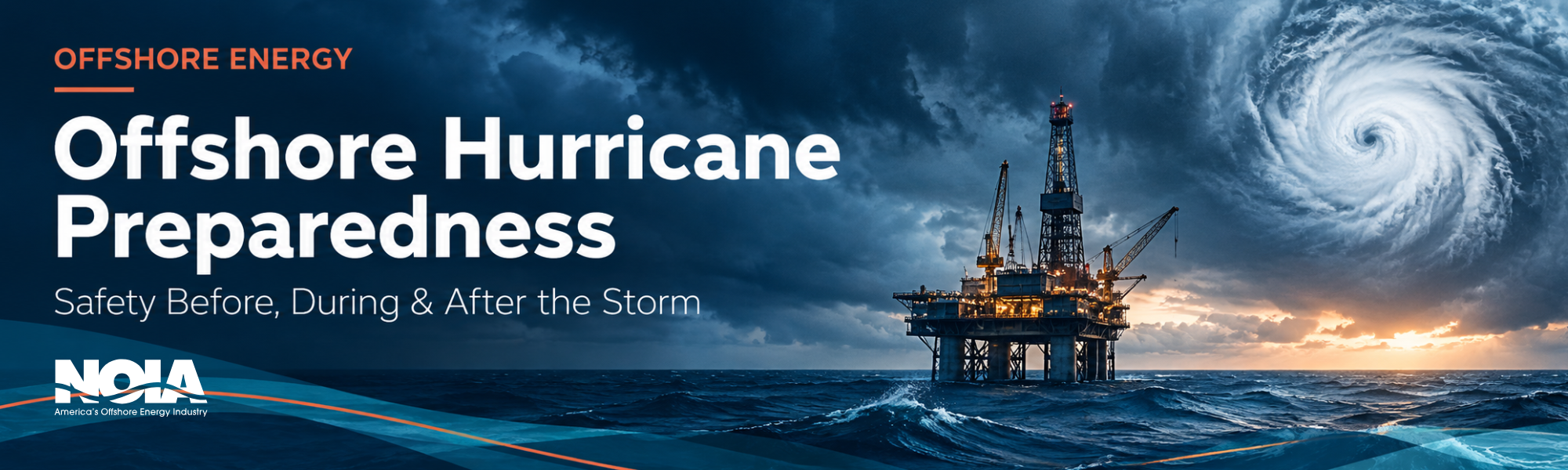
Safety Before, During & After the Storm
The offshore energy industry prepares year-round for hurricanes and severe weather in the Gulf of America. Long before a storm approaches, operators work with regulators and other stakeholders to develop response plans that protect personnel, secure offshore facilities and enable operations to shut down safely when necessary.
The Offshore Evacuation Process
Operators follow a phased response informed by weather forecasts, established procedures and coordination with aviation and marine transportation providers.

Phase 1
Monitor & Prepare
|

Phase 2
Secure & Evacuate
|

Phase 3
Shut Down & Clear the Area
|
Conditions can change quickly. Operations outside a storm's projected path may also be shut down as a precaution because hurricane tracks and conditions can change.
Built for Severe Weather
Offshore safety regulations and industry standards have evolved over decades of operating experience in the Gulf of America.
|
Designed For
100-Year
Storms |
Offshore rigs built since 1988 are designed to withstand “100-year storm” conditions, including the extreme wind and wave conditions associated with major hurricanes. |
Regulations and standards address:
| ✓ Offshore platform and structural design |
✓ Moored and jack-up drilling rig fitness requirements |
| ✓ Well securing and safety systems |
✓ Inspection requirements |
| ✓ Mobile Offshore Drilling Units (MODUs) and tracking systems |
✓ Equipment and tie-down requirements |
After the Storm: Inspect Before Restart
Operations do not automatically resume when a storm passes. Once conditions are safe, operators follow a controlled assessment and restart process.
|
1
Assess
Conduct aerial surveys to identify visible damage, spills or other potential hazards.
|
2
Inspect
Send assessment crews offshore when conditions allow to physically inspect facilities.
|
3
Verify
Evaluate pipelines and other supporting infrastructure for potential damage.
|
4
Restart
Resume production and drilling operations only after facilities and supporting infrastructure are determined safe.
|
Tracking through the storm: GPS and remote monitoring systems also help operators track mobile offshore drilling units before, during and after severe weather. |
|
Safety Drives Every Decision
Thousands of men and women work offshore, and their safety comes first. Operators begin evacuating personnel and shutting down production well before severe weather arrives, and operations resume only after facilities and supporting infrastructure have been inspected and determined safe.
|
|
|