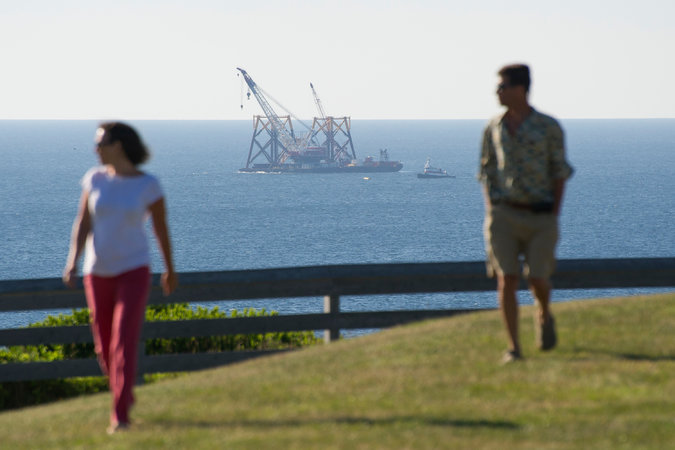
Offshore Energy Today - Boskalis made history in Rotterdam recently when it loaded the Armada Intrepid FPSO aboard its largest, actually the world’s largest, heavy lift and transportation vessel, the Dockwise Vanguard. According to Boskalis, this was the first ship-shaped FPSO loaded onto the 275 meters long Dockwise Vanguard, and the fact that the FPSO weighs 60.000 tones makes it one of the heaviest cargoes ever transported. Read more and view video at Offshore Energy Today
NOIA Statement on Conditional Approval of Chukchi Exploration Plan
For Immediate Release: Monday, May 11, 2015
Contact: Nicolette Nye, (202) 465-8463, nicolette@nullnoia.org
NOIA Statement on Conditional Approval of Chukchi Exploration Plan
Washington, D.C. – NOIA President Randall Luthi issued the following statement on BOEM's conditional approval of Shell's revised Chukchi Sea exploration plan:
“The Bureau of Ocean Energy Management’s decision to conditionally allow Shell to proceed with the carefully planned and coordinated drilling effort in Alaska is good news. The potential for energy development in the Chukchi Sea would allow Alaskans to benefit from well-paying jobs and resources to safeguard the environment, protect native traditional activities, and improve communities. The Trans-Alaska Pipeline may also benefit from the flow of resulting production. For the rest of the U.S. and the world, successful oil and natural gas development in the area will help to meet the ever increasing demand for reliable, reasonably priced energy.”
ABOUT NOIA
NOIA is the only national trade association representing all segments of the offshore industry with an interest in the exploration and production of both traditional and renewable energy resources on the nation’s outer continental shelf. NOIA’s mission is to secure reliable access and a fair regulatory and economic environment for the companies that develop the nation’s valuable offshore energy resources in an environmentally responsible manner. The NOIA membership comprises more than 325 companies engaged in business activities ranging from producing to drilling, engineering to marine and air transport, offshore construction to equipment manufacture and supply, telecommunications to finance and insurance, and renewable energy.
Saltiel: Moving on from the BP blowout

April 29, 2015 Corpus Cristi Caller Times (subscription) -
Last week marked the fifth anniversary of the Macondo incident in the Gulf of Mexico. We remembered those who were directly affected, especially the 11 workers from the Deepwater Horizon who lost their lives and the thousands of people in Texas and elsewhere who saw their livelihoods upended by the oil spill and the ensuing drilling moratorium.
Now we should use this milestone as an opportunity to take stock of where we are and where we're going. Drilling for oil and natural gas off our nation's shores will continue to be a potentially hazardous business. But it's clear that the benefits far outweigh the risks: We must develop our offshore energy natural resources for employment, economic and national security reasons.
Much has changed over the past five years. When the Macondo incident occurred in 2010, the shale revolution was just beginning. The goal of U.S. energy independence seemed as unattainable as ever. And offshore drilling was limited to the central and western Gulf of Mexico.
Today, the United States is producing more oil than at any time since 1972 — and we may soon overtake Saudi Arabia as the second-biggest producer (after Russia). Hydraulic fracturing technology has unlocked huge reservoirs of natural gas, leading to a manufacturing revolution as companies build new factories and create jobs here at home rather than overseas. And the Obama administration has issued a proposed five-year offshore oil and gas leasing program that contemplates opening areas off the Atlantic Coast for the first time in decades. America's energy future looks very bright.
Our industry has made great strides in improving operational reliability since Macondo, and we are committed to operating safely to ensure that such an incident never occurs again. The federal government and private industry have implemented significant reforms regarding drilling and workplace safety, worker training, and blowout preventer testing and maintenance. The Department of the Interior recently proposed additional regulations covering blowout preventer safety and well control operations. We all remember that Macondo's environmental impact was prolonged by the lack of available equipment to cap a subsea blowout. Today, appropriate well containment equipment is accessible by all Gulf of Mexico operators if needed.
Offshore energy resources will continue to play an important role in the Texas and U.S. economies. One recent study concluded that more than 800,000 new jobs would be created nationwide (62,000 of them here in Texas) by 2035 if we open the Eastern Gulf of Mexico and the Atlantic and Pacific coasts to exploration and production. More than half a trillion dollars could be contributed to the economy while governments at every level would take in $200 billion in tax revenue.
We have come a long way since the blowout of the Macondo well on April 20, 2010. Even as we mourn the losses that occurred five years ago, we can be proud of the progress our industry has made and commit ourselves to a safe and prosperous energy future.
Rob Saltiel is the president and CEO of Atwood Oceanics Inc., a Houston-based company engaged in the drilling and completion of exploration and development wells for the global oil and gas industry.
Sanford shifts stance, opposes offshore testing, drilling
Bo Petersen Apr 27 7:48 pm
MOUNT PLEASANT — U.S. Rep. Mark Sanford switched positions Monday to oppose offshore oil and natural gas exploration and drilling.
It was a question of finding a balance, he said. Sanford had supported the exploration to find out what resources might be out there.
...
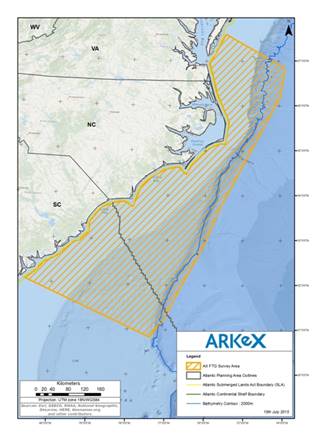
“We will continue to work with the South Carolina delegation, engaging in thoughtful conversation with them and their constituents to ensure fact-based discussion,” said Nicolette Nye, Ocean Industries Association communications vice president. “It is premature to prohibit the reopening of the Atlantic to oil and natural gas without first having a better idea of the extent of resources available for development.”
We’ve come a long way since the Gulf spill
April 21, 2015 - The Macondo well accident in the Gulf of Mexico, which marked its fifth anniversary on Monday, was a true tragedy. Eleven oil rig workers lost their lives, and no well is worth the loss of a single life. Tens of thousands of people in hundreds of communities were affected directly and indirectly by the ensuing oil spill.
But even as we study the Obama Administration's newly issued blow-out preventer and well control regulations, at least four of the lessons we already have learned from this accident have and will continue to make offshore oil and natural gas drilling safer.
Read more in Washington Examiner
- « Previous Page
- 1
- …
- 160
- 161
- 162
- 163
- 164
- …
- 231
- Next Page »